


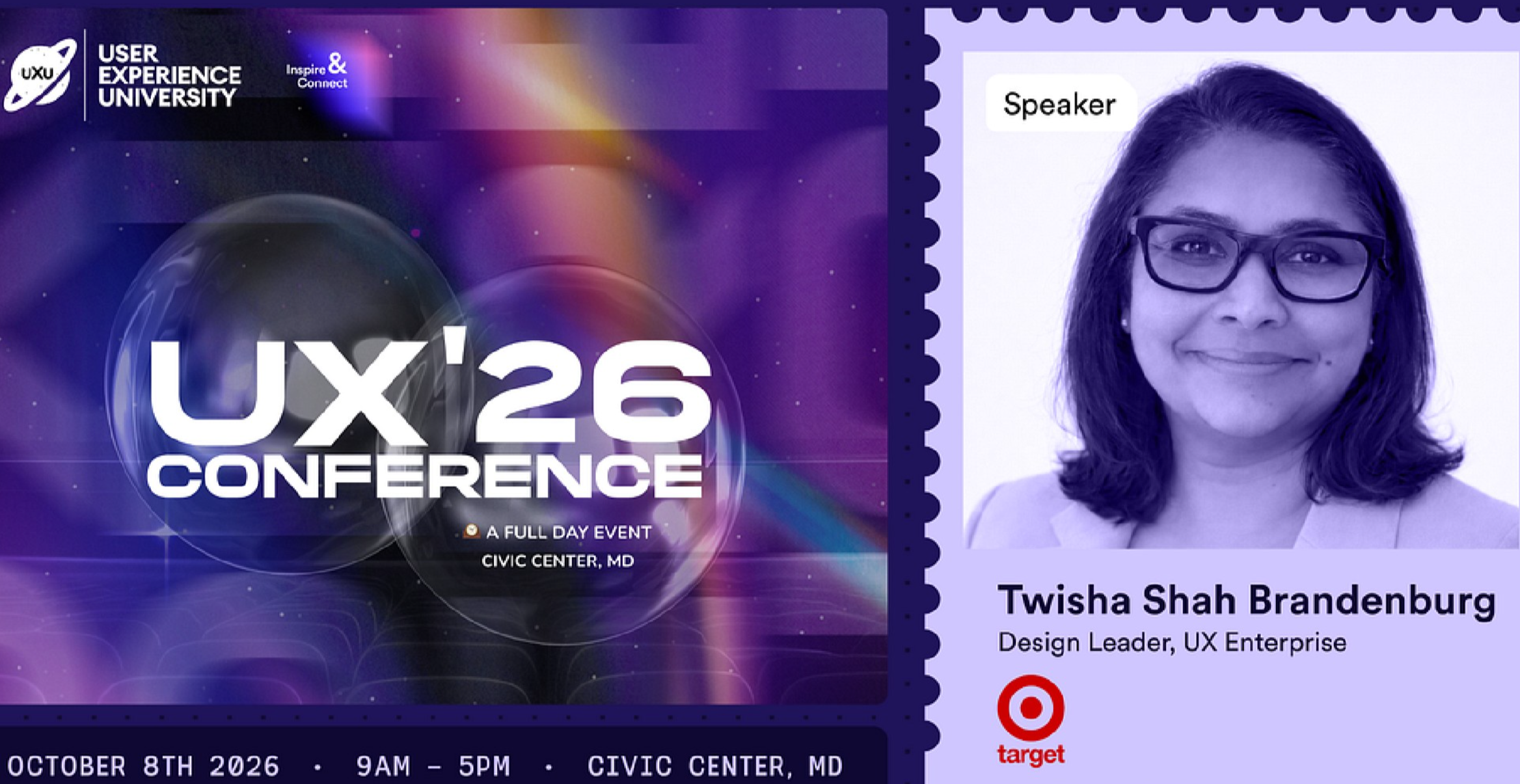
Industry Panel Discussion: UXCon, 2026
Inspire & Connect - Upcoming Oct 8, 2026
In this thought-provoking panel, Twisha Shah-Brandenburg explored the persistent gap between what organizations build and what customers actually need. Drawing on her experience leading design at scale, she challenged teams to move beyond surface-level insights and interrogate the assumptions driving their decisions.
She pushed the conversation toward a deeper, behavior-driven understanding of customers, emphasizing that true alignment does not come from more data, but from better interpretation of human needs in context. Through practical examples, she highlighted how teams can connect product, design, and business strategy in ways that create clarity rather than fragmentation.
The discussion ultimately reframed success away from output and toward meaningful impact. Attendees left with a stronger lens for evaluating their own work, along with tangible ways to shift from building features to solving the right problems.

Workshop: DDX San Diego
From Optimizing Interfaces to Designing Organizations - Sep 17, 2026
Most design teams inherit their organization's dysfunction and treat it as weather: unavoidable, unchangeable, something to work around. But the friction that erodes customer experience, the slow handoffs, misaligned incentives, and decisions made three layers away from the user, is not weather. It is architecture. And architecture can be redesigned.
This hands-on workshop puts design methods to work on the organization itself. I will lead participants through mapping the real flow of work against the official org chart, tracing where customer experience breaks down across team boundaries, and converting the friction they find into design problems with owners, constraints, and solutions rather than complaints that circulate in retros.
Participants will leave with a completed diagnostic of one real problem from their own organization, a framework they can rerun with their teams, and the language to bring organizational design debt into conversations with senior leaders as a strategic issue, not a gripe.
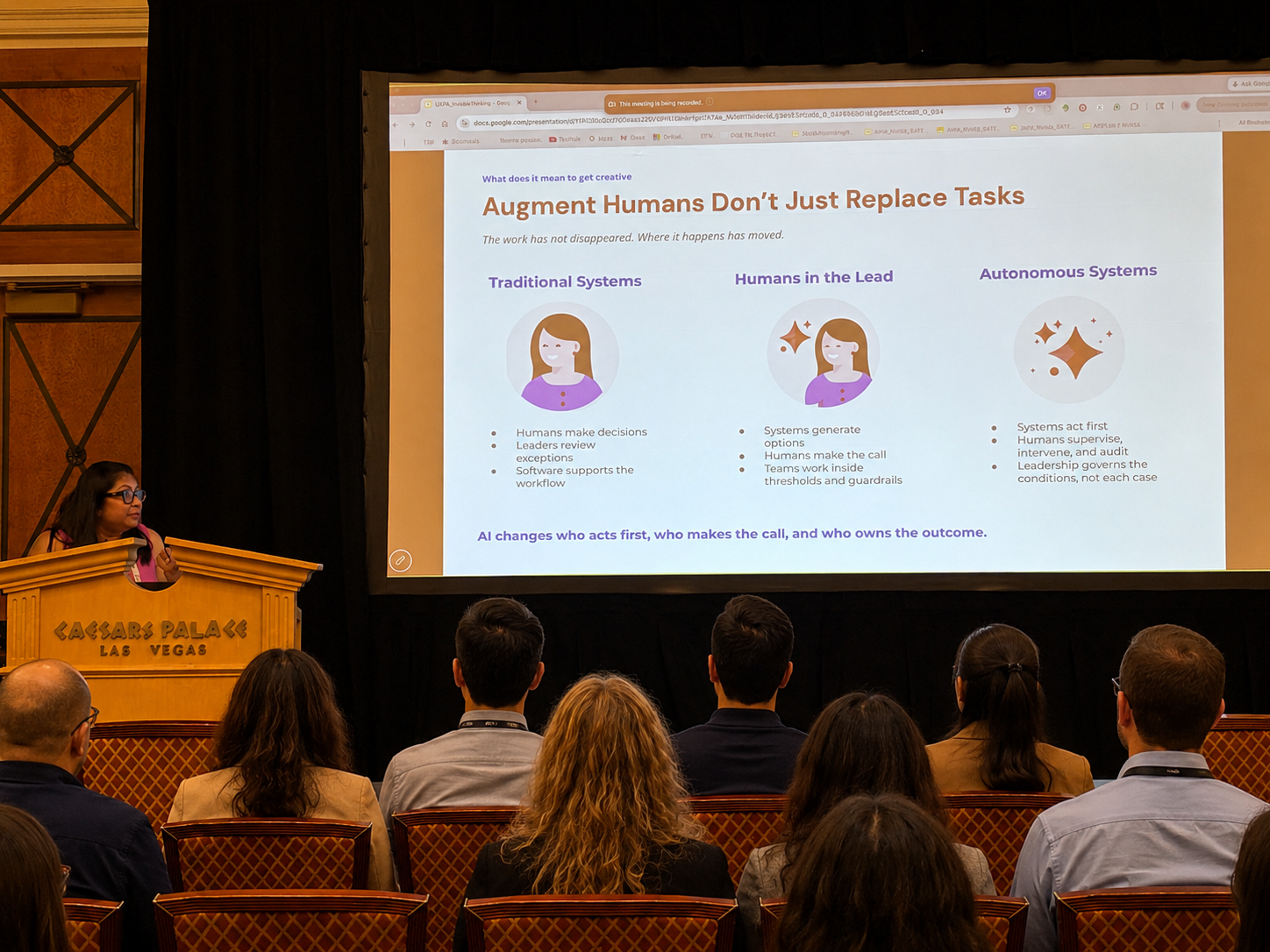
The Invisible Work of Design - June 23, 2026
In most organizations, the work that gets celebrated is what can be shipped, demoed, or tracked on a dashboard. Yet the true power of UX often comes from invisible contributions: reframing problems so teams solve the right thing, bridging silos, stitching together incomplete systems, and shaping culture through listening and sensemaking. These acts rarely appear on roadmaps, but without them, products fail, and organizations stagnate.
This session explored how to surface, value, and scale the invisible layers of UX. Through case studies from enterprises and startups, I shared how design leaders can make tacit influence visible, build trust with executives, and prevent teams from being reduced to pixel polishers. Attendees learned to identify invisible contributions that drive impact, communicate this value to stakeholders, and scale connective UX work without burning out teams.
Speaker: UXPA International 2026
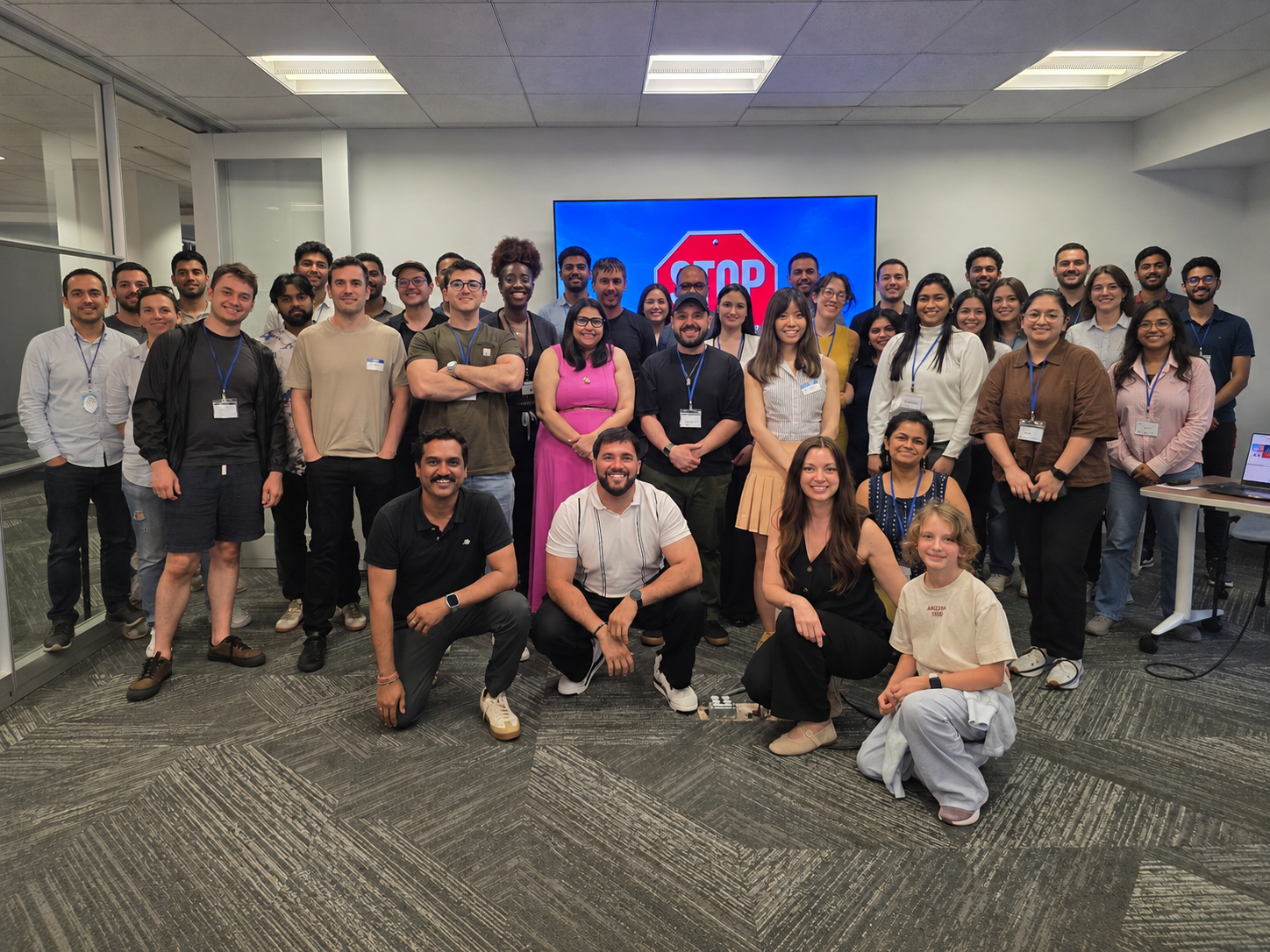
Keynote + Workshop: Hosted by ADPList and Nvisia
Stop Automating the Easy Things - June 10, 2026
In this talk, I explored why designers have a critical role to play in the AI economy, not as decorators of interfaces, but as architects of human decision-making. Designers are often the only people in the room trained to understand how people interpret information, make trade-offs, respond under pressure, and navigate uncertainty. That is not a soft skill. It is one of the most strategically valuable capabilities a team can have right now.
This conversation challenged designers to stop spending their most valuable thinking on button states and start claiming the professional territory of decision architecture before someone else defines it without them.
Attendees left with a concrete framework for thinking about decision architecture, practical questions to bring back to their teams, and a clearer understanding of how design can shape the future of AI-powered products, systems, and organizations.
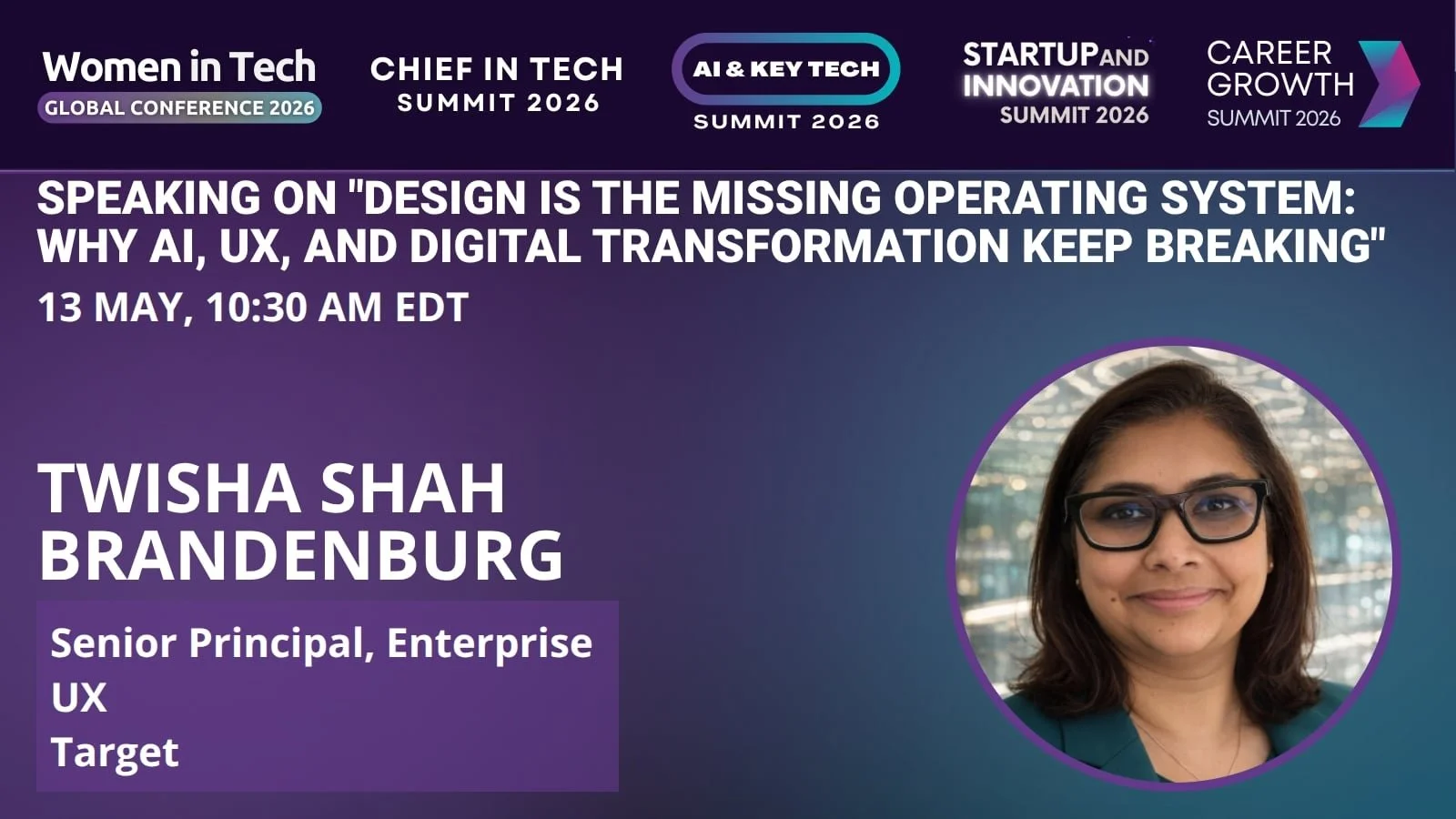
Speaker: Women in Tech Global Conference
Design is the missing operating system - May 13, 2026
As organizations race to adopt AI, redesign customer experiences, and modernize their tech stacks, many are hitting the same wall: the technology works, but the experience doesn't. The biggest failures in UX, CX, and AI transformation are not technical problems. They are design failures at the system level.
Drawing from real-world experience inside complex, digital-first organizations, this session reframed design as the connective tissue that aligns people, processes, data, and technology. Attendees learned how invisible work, handoffs, language, incentives, and organizational structures shape user experience far more than screens or features alone. It was a call to elevate design from execution to orchestration, and to recognize that great experiences emerge when organizations themselves are intentionally designed.
How to Strengthen Product Strategy with Design - April 1, 2026
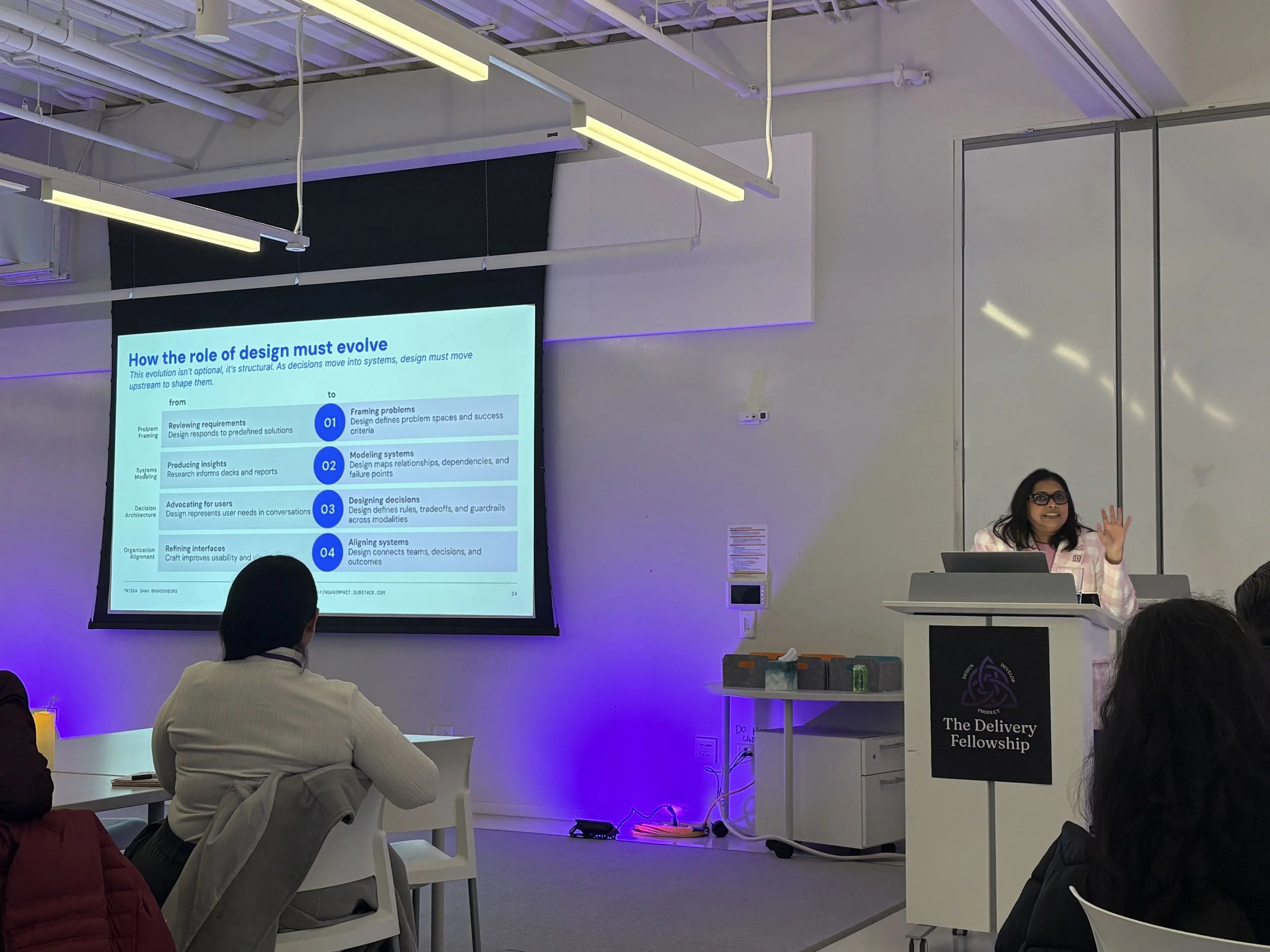
This Delivery Fellowship session focused on how design can strengthen product strategy and move from a supporting role to a strategic advantage inside modern organizations.
In many organizations, design is still treated as a service function that executes product tickets rather than helping shape product direction. Yet the companies building the strongest products today are those where design contributes to strategy, influences decisions, and improves measurable business outcomes.
In this session, we explored how organizations can strengthen product strategy through design, identify gaps in design maturity, and understand how stronger design practices can improve product outcomes and reduce operational friction.
From Resistance to Reinvention: The Human Work of Design Maturity - Feb 20, 2026
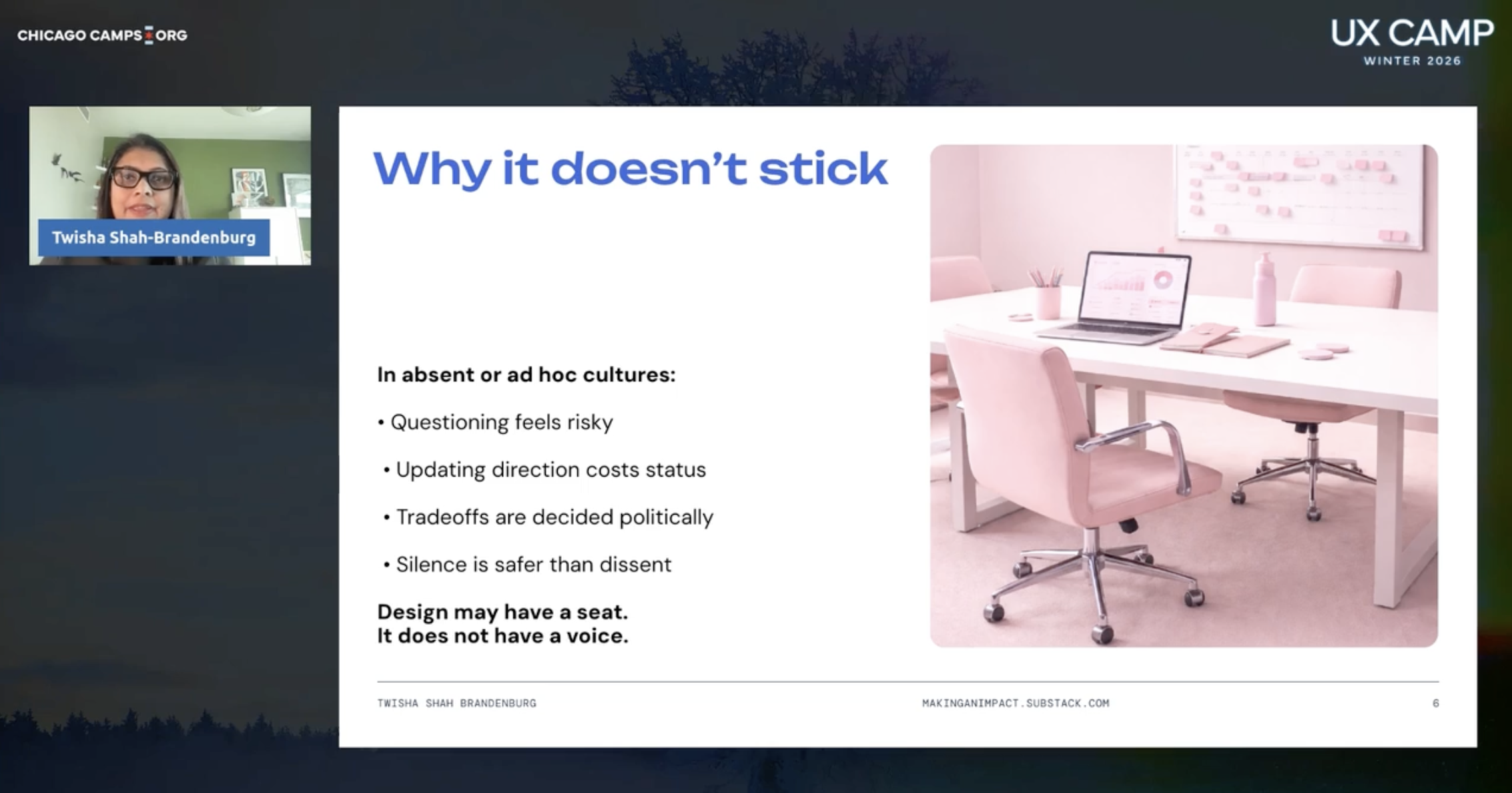
We talk about design maturity as if it's a process problem: more methods, more playbooks, more frameworks. But the truth is, most of the resistance leaders face has less to do with design skills and more to do with human dynamics: trust, alignment, and the willingness to reinvent. In this talk, I explored how to navigate the messy middle of design maturity by treating it as human work.
I shared stories from guiding large-scale transformations, where progress came not from grand blueprints but from co-creation, narrative framing, and small wins that built momentum. Attendees learned practical ways to turn resistance into influence and see their own organizations' design maturity as less of a hurdle and more of a leadership opportunity.
Virtual Speaker: Chicago UX Camp

Panel Discussion: ADPList Chicago and Askable
Panel Discussion: Are You Designing Products That Truly Meet Customer Needs?”
In this panel, I explored the persistent gap between what organizations build and what customers actually need. Drawing on my experience leading design at scale, I challenged teams to move beyond surface-level insights and interrogate the assumptions driving their decisions.
I pushed the conversation toward a deeper, behavior-driven understanding of customers, emphasizing that true alignment does not come from more data, but from better interpretation of human needs in context. Through practical examples, I highlighted how teams can connect product, design, and business strategy in ways that create clarity rather than fragmentation.
The discussion ultimately reframed success away from output and toward meaningful impact. Attendees left with a stronger lens for evaluating their own work, along with tangible ways to shift from building features to solving the right problems.
Keynote: Designing for Impact: Transforming Organizations through human-centered design
Twisha took the stage to unpack how human-centered design is not just a methodology, but a strategic lever for building organizations that actually work. Through a mix of real-world examples and hard-earned insights, she showed how embedding design into the core of organizational decision-making unlocks innovation, sharpens experiences, and fuels a culture where creativity and collaboration are not aspirational, but operational.
She brought to life how design moves beyond craft to become a catalyst for meaningful change. By aligning what organizations want to achieve with what people actually need, she demonstrated how design thinking cuts through complexity, accelerates outcomes, and creates coherence across teams, channels, and systems.
Instead of prescribing outcomes, she reframed what’s possible. The session challenged conventional approaches to problem-solving and invited leaders to rethink how their organizations operate at the intersection of strategy, systems, and human need. Attendees left with a sharper lens for identifying opportunities, asking better questions, and applying human-centered design in ways that are both practical and transformative.

Speaker: Abbvie UX Summit

Speaker: UXPA International
Radical Empathy: Path to Justice and Equity
In this session, I explored how bias shows up in the products and systems we design, often reinforcing inequities for underrepresented groups. Through real-world examples, I highlighted how both product decisions and design systems can unintentionally exclude.
I introduced radical empathy as a starting point, challenging teams to examine their own identities, assumptions, and blind spots. Drawing from my work with cross-functional teams, I shared a simple framework for unpacking bias and widening the lens on both problem and solution.
The session focused on practical application, offering a toolkit and clear strategies to help teams build more inclusive products. Attendees left with actionable ways to embed equity into their process and move beyond intention toward meaningful change.